

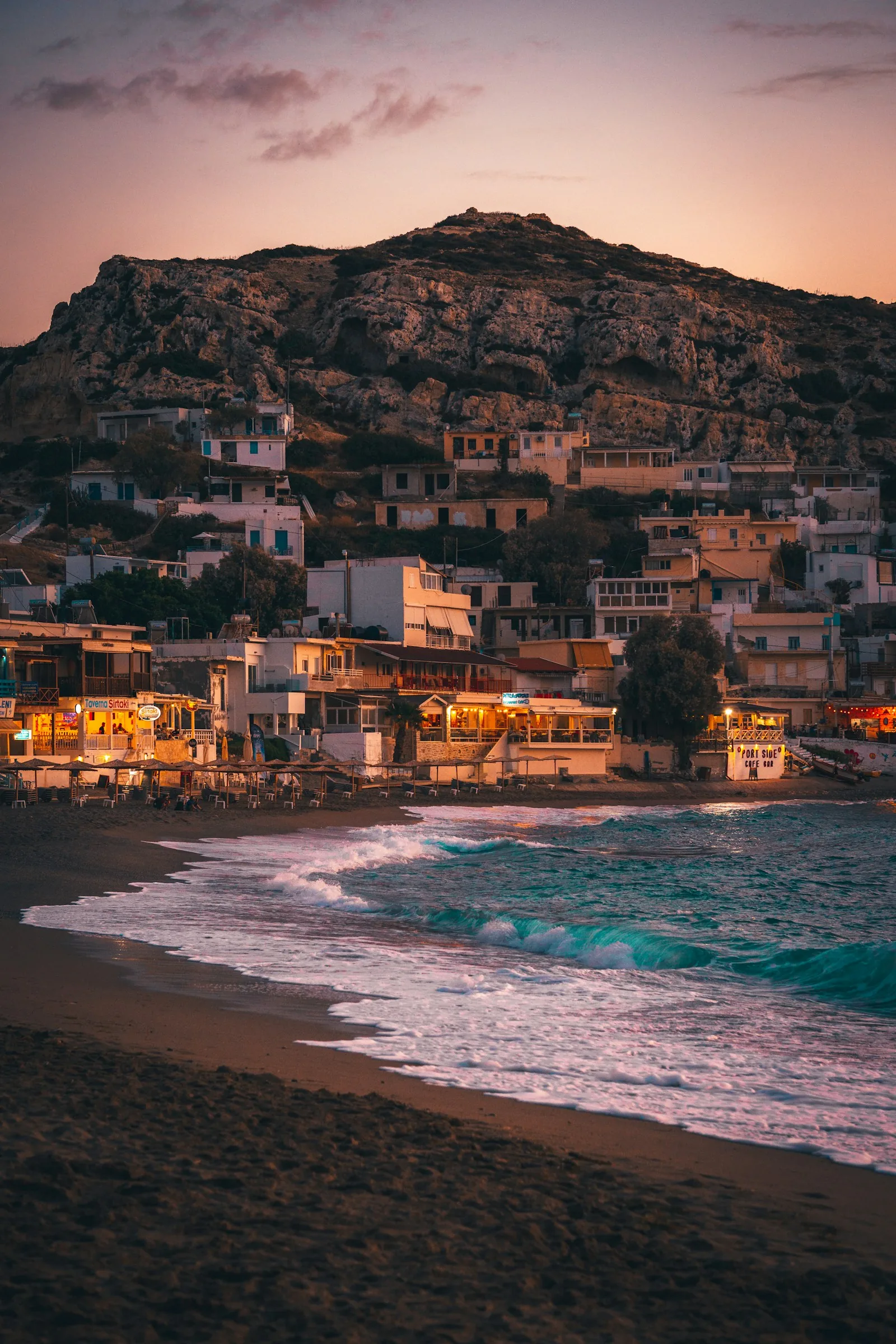
The interior of Crete is older and slower than the coast. An hour inland, the road begins to climb through olive groves and eventually opens onto small white villages that have not yet learned to perform for visitors. Time runs differently in these places. Mornings are for bread, gossip and the post; afternoons are for shade.
Anogia, on the slopes of Psiloritis, is the village we send guests to most often. Its lyra players are still its pride. A long lunch at a family taverna there, with mountain cheeses and stifado cooked since dawn, is one of the more affecting meals you can have on the island. After lunch, the road continues higher to the Nida plateau, where the air is thinner and the silence is real.
Time runs differently in these places.
Further south, Zaros sits beside cold springs that feed trout farms and the kitchens of half the island. The walk through the Rouvas gorge begins on its outskirts — a thin path under plane trees, ending at a small chapel by a stream. Margarites, a little to the east, is the village of potters; you can spend an hour watching a wheel turn and not feel that time has passed.
These are not destinations in the usual sense. They are small refuges of the older Crete, and the right way to visit is without a plan.