

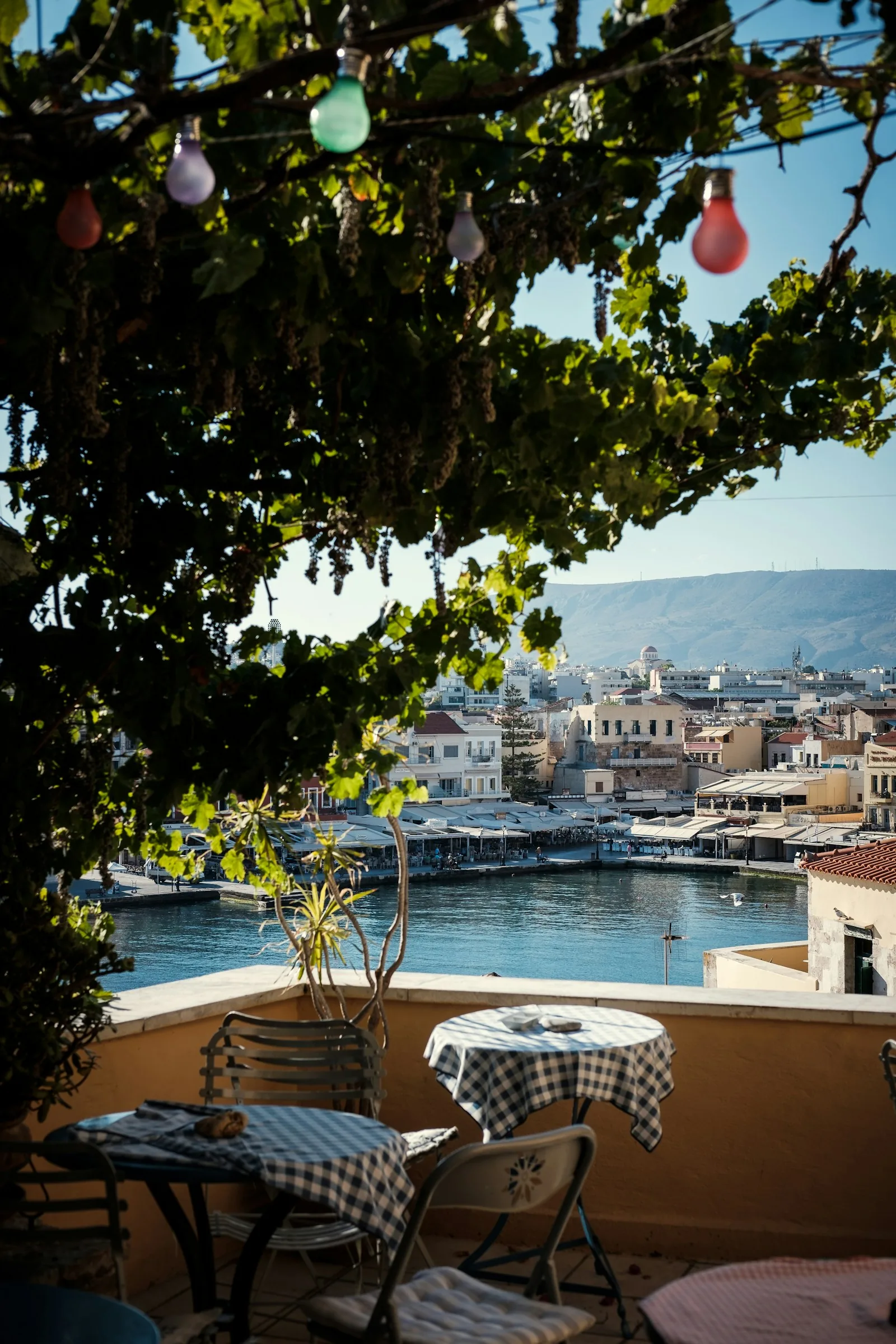
The Cretan diet is one of the most studied in the world, and yet the kitchen behind it remains simple. Olive oil, wild greens, barley rusks, mountain cheeses, lamb, honey, herbs gathered by hand. The ingredients have not changed much in five hundred years; what has changed is how much attention we pay to them.
At Lofos we cook close to that older grammar. Bread is baked in the morning. Fish arrives directly from the boats in Heraklion, sometimes still wet with seawater. Tomatoes, peppers and beans come from gardens in the Messara plain. The wine is mostly Cretan — Vidiano, Vilana, Liatiko — and the spirits are tsikoudia, served cold from the freezer in small carafes.
Meals do not end here; they thin out gradually, like the light.
The character of a Cretan table is not in any single dish. It is in the rhythm — small plates that keep arriving, a slow conversation, a long pause before dessert, and finally a piece of fruit and a glass of something distilled.
If you want to understand the island, eat as the island eats — without urgency, and for a long time.